
Russia's Recent Ban on the "International Satanist Movement": A Comprehensive Overview
Posted in: Politics · Religion · Law
Date: 2026-6-3 12:28:13
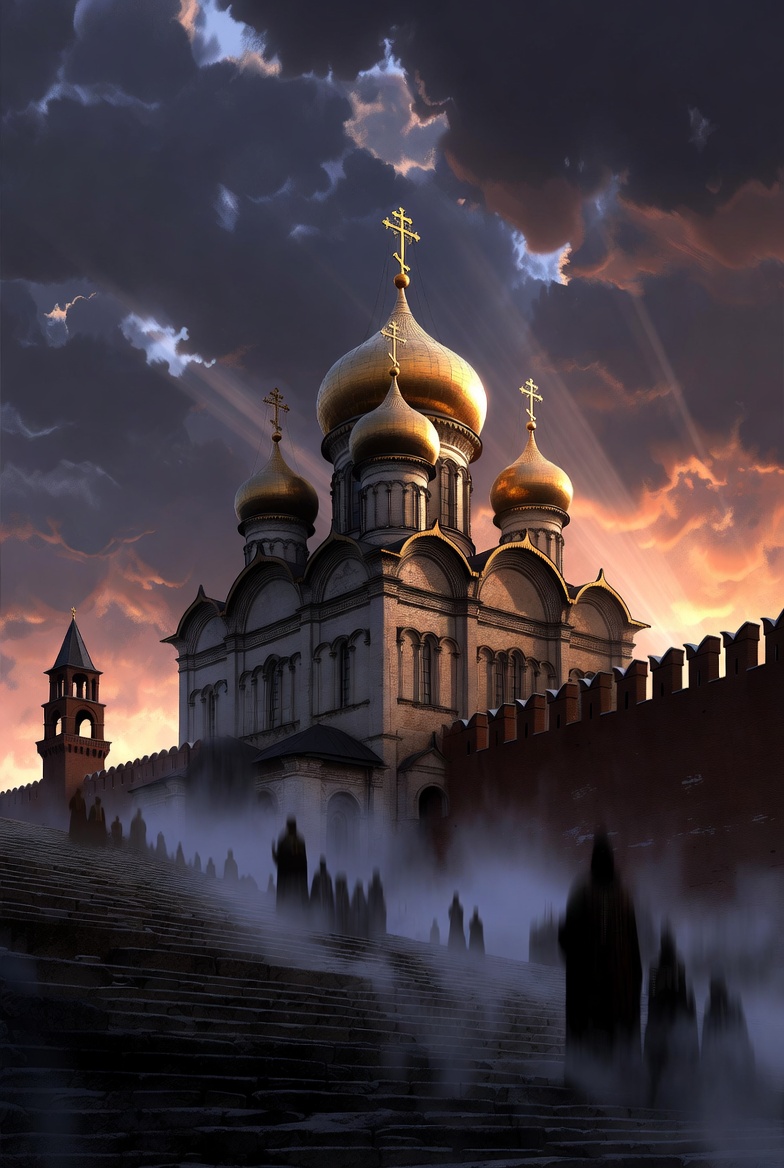
The Supreme Court’s Landmark Ruling
In July 2025, Russia's Supreme Court designated the "International Satanist Movement" (also referred to as the "International Movement of Satanists" or simply "Satanism") as an extremist organization and banned its activities nationwide. This took effect immediately following the closed-door hearing on July 23, 2025.
Overview and Legal Basis
This was not a new parliamentary law passed by the State Duma, but a court ruling under Russia's existing 2002 anti-extremism legislation. The decision mirrors the 2023 Supreme Court ban on the "international LGBT movement," which has enabled broader crackdowns.
Judge Oleg Nefedov presided over the case (the same judge who handled the LGBT ruling). The hearing was closed to the public and media.
Background and Initiation
The Prosecutor General’s Office (led by Igor Krasnov) and the Ministry of Justice filed the lawsuit in early July 2025. They described the "movement" as promoting hatred toward traditional religions (especially Russian Orthodoxy), justifying violence, neo-Nazism, desecration of churches and crosses, ritual crimes (including alleged ritual killings and animal abuse), and undermining Russia's constitutional order.
Russian Orthodox Patriarch Kirill publicly advocated for banning Satanism earlier in 2025 (as early as January), linking it to threats against Russian values, youth recruitment, and even soldiers in the Ukraine conflict. Conservative lawmakers held roundtables comparing Satanism to other perceived threats like "destructive cults," LGBT issues, abortion, and Ukraine's Azov Brigade. A Duma roundtable in April 2025 further framed these issues.
"Expert" testimony, such as from Roman Silantyev, claimed tens of thousands of Satanists in Russia and hundreds of ritual crimes since 1993.
The ruling was hailed by the Prosecutor General’s Office as a victory in the "eternal struggle between good and evil."
Nature of the "Movement"
Critics, independent outlets, and analysts widely note that no structured, organized "International Satanist Movement" exists as a global entity. It is viewed as a vague or invented label encompassing various occult, esoteric, Satanist, or subcultural groups/individuals. This vagueness enables broad application.
What the Ruling Outlaws
Activities: Promotion, participation, financing, organization, or any involvement tied to "Satanism," including the "general principles of Satanism" and "occult rituals."
Symbols and propaganda: Display, dissemination, or use of associated symbols and imagery (e.g., pentagrams, Sigil of Baphomet, Leviathan's cross, Baphomet imagery). This potentially affects art, music (certain metal genres), literature, tattoos, clothing, online posts, esoteric items, and even fictional depictions.
The full court decision and exact list of prohibited items were not fully public initially, contributing to uncertainty.
Penalties and Enforcement Mechanisms
Addition to the federal extremist registry (completed by September 2025), leading to blocked websites/content, bank account freezes, employment/public office restrictions, and monitoring.
Administrative penalties: Fines or short detentions (e.g., 3 days jail) for symbols or propaganda (under articles like 20.3 of the Code of Administrative Offences).
Criminal penalties: Up to 6–8 years imprisonment for organizing, recruiting, participating, or certain propaganda activities, depending on specifics. Penalties vary by involvement level.
Expectations Going into Effect
Broad, selective enforcement: Expected to function as a flexible tool for ideological control, similar to the LGBT ban, targeting subcultures, artists, online content, and dissent while protecting Orthodox influence.
Chilling effect: Self-censorship in metal/gothic/pagan/esoteric scenes, shops, and social media.
Vagueness as a feature: Allowing authorities to combine with other charges (e.g., Nazi symbols, other extremism).
Political/religious signaling: Reinforcing "traditional values" against "Western hybrid warfare."
Actual Enforcement Outcomes (as of mid-2026)
The ruling has led to targeted but growing use, primarily low-level administrative cases with some criminal escalation. It serves as an additional pretext in the anti-extremism toolkit rather than a massive standalone crackdown.
Case volume: At least 66 administrative cases by May 2026 for "Satanist propaganda/symbols." Over 50 stemmed from social media posts. Triggers include pentagrams (dozens of cases), Baphomet imagery, tattoos, clothing, cups/books, esoteric shop sales, and public displays/rituals.
Penalties in practice: Mostly fines or short administrative arrests. Examples include a December case in Astrakhan (3 days jail for a pentagram post, plus other extremism charges).
Criminal cases: At least one known conviction by April/May 2026 (e.g., a 24-year-old in Voronezh received 1 year corrective labor for VK posts with a pentagram alongside Hitler imagery).
Patterns: Often combined with other extremism charges (Nazi symbols, etc.). Targets include individuals with neo-Nazi leanings or casual occult imagery. New phenomenon tracked by monitors like SOVA Center and OVD-Info. Broader 2025 context: Over 5,500 symbol-related administrative cases overall, with Satanist ones as a growing subset.
Broader Impacts and Criticisms
Cultural/subcultural effects: Chilling impact on esoteric shops, metal/gothic scenes, art, tattoos, and online expression. Risks to pagan/occult practices.
Authoritarian tool: Fits a pattern of banning vague "movements" to suppress nonconformity, shield the Russian Orthodox Church, and control ideology. Independent analysts (Mediazona, Meduza, Novaya Gazeta Europe, The Wild Hunt, Politico) describe it as creating fictional threats for repression.
Limited but expanding scale: Not mass arrests, but contributes to overall repression statistics amid the war and political controls. Potential spillover to other beliefs.
International perspective: Viewed as further erosion of religious freedom, artistic expression, and human rights. Concerns raised by groups monitoring extremism and belief freedoms.
This ruling exemplifies Russia's use of anti-extremism laws for ideological conformity under the banner of traditional values. Information draws from consistent reporting across independent Russian sources (Mediazona, Novaya Gazeta Europe, Meduza, OVD-Info, SOVA Center) and international outlets. Enforcement details continue to evolve.
O Yah, the Most High, Creator of heaven and earth, we come before You in humility and reverence.
We thank You for the Supreme Court’s ruling in July 2025 that designated the so-called International Satanist Movement as extremist and banned its activities in Russia. We praise You for this stand that protects the innocent, upholds traditional values, and pushes back against forces that seek to defile Your holy name and harm Your people.
Yah, guard the Russian nation, its leaders, its churches, and its people from all occult influence, deception, and spiritual attack. Let Your light expose every hidden work of darkness, every ritual, every symbol, and every agenda that opposes Your righteousness.
Strengthen the faithful, protect the youth, and grant wisdom to those in authority so that justice and truth prevail. May this ruling be a beacon that inspires other nations to honor You and reject evil.
Shield all who love You from persecution, and let Your Kingdom advance in Russia and throughout the earth. We ask this in the mighty name of Yahshua the Messiah.
Amein.