

Scandals, Suppression, and the Dawn of Trump's All New Golden Era: The Hunter Biden "Laptop from Hell" – What All We Think We Actually Know About It
Posted in: Hunter Biden Laptop · Trump Golden Age · Political Scandals
Date: 2026-1-14 03:55:05
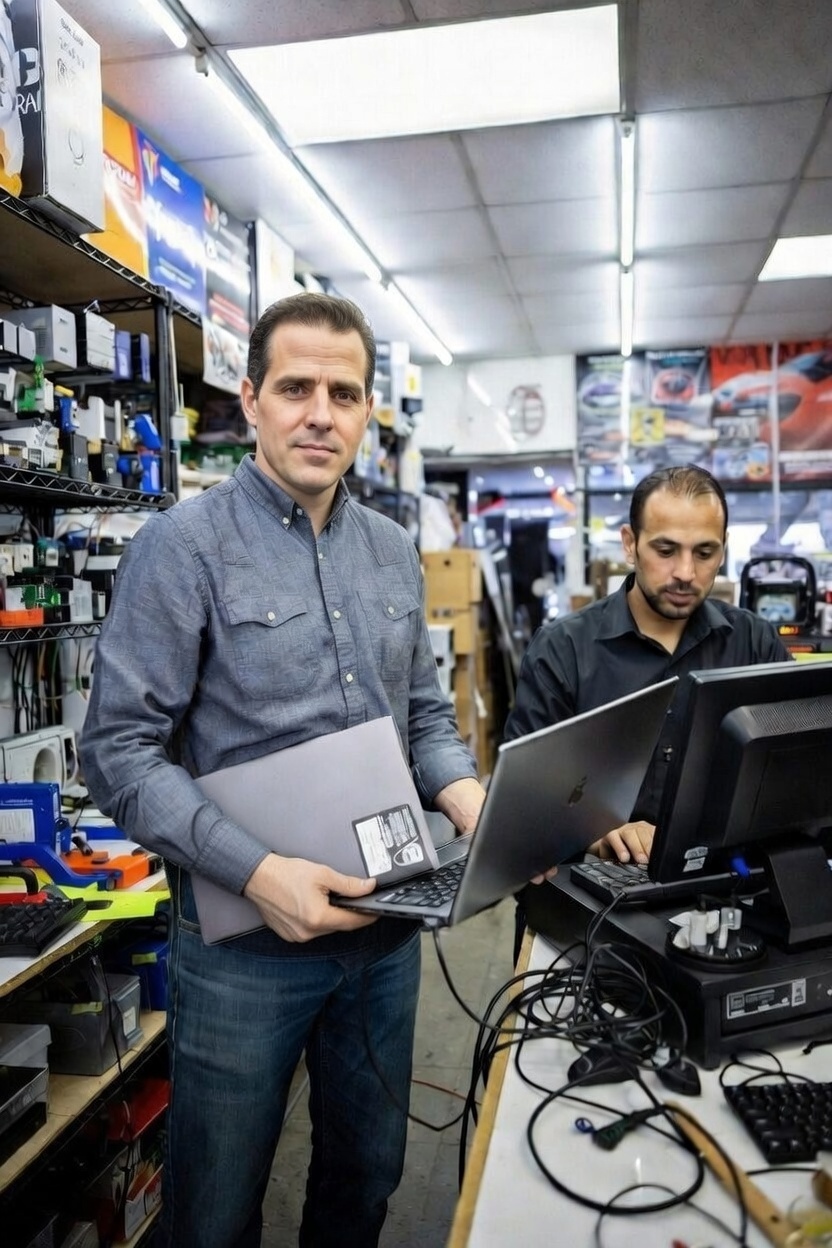
The Drop-Off That Sparked a Firestorm
Picture this: It's April 2019 in a quiet Delaware computer repair shop. A man drops off a MacBook Pro, signs some paperwork, and vanishes. The laptop sits unclaimed. Fast-forward to October 2020, just weeks before a razor-close presidential election, and the New York Post drops a bombshell story: This forgotten device allegedly belongs to Hunter Biden, and its contents could rock Washington.
The Explosive First Revelations
Emails surface suggesting Hunter leveraged family connections for overseas business deals—like his board seat at Ukrainian energy firm Burisma. There's talk of introductions to "the big guy," whispers of influence peddling. The story explodes. Social media giants throttle its spread. Intelligence veterans pen a letter hinting at "Russian disinformation." Joe Biden calls it a smear in the debates. The laptop becomes a cultural lightning rod overnight—the infamous "laptop from hell."
Confirmation After Confirmation
But here's where the plot twists: The device wasn't Russian fiction. It was real. And over the next few years, piece by piece, that reality got confirmed in the most ironclad ways possible.
Major news organizations—ones that initially held back—conducted their own forensic reviews. The Washington Post and The New York Times authenticated key emails and files in 2022. Politico had already verified pivotal messages back in 2021 by cross-checking recipients and metadata. CBS News ran its own analysis and called the materials legitimate. Even the FBI, which took possession of the original laptop early on, treated it as authentic in investigations.
What Was Actually on the Device?
What actually turned up inside? A raw, unfiltered slice of Hunter Biden's private life during a turbulent period. Thousands of emails detailing his foreign business ventures—Burisma, Chinese energy firms like CEFC, Romanian deals—often blurring lines between personal gain and political proximity. Text messages and financial records painting a picture of high-stakes wheeling and dealing abroad while his father was vice president.
Then there's the personal side—raw and messy. Photos and videos capturing heavy drug use, mostly crack cocaine. Explicit images and recordings of sexual encounters with consenting adults. Audio from Hunter's own 2021 memoir Beautiful Things (read aloud in court) describing addiction's grip: cooking crack, rehab stints, spiraling behavior. Prosecutors later called it proof he knew exactly what he was doing when he checked "no" on drug-use questions during a 2018 gun purchase.
The Courtroom Showdown
That gun case became the laptop's biggest public encore. In June 2024, federal prosecutors in Delaware hauled the device into court—literally holding it up for the jury. An FBI agent testified about messages and cloud backups confirming Hunter's addiction timeline. The jury convicted him on three felony counts related to the firearm. The laptop wasn't just a political football anymore; it was courtroom evidence.
The Darker Rumors That Never Held Up
Rumors swirled darker claims—child pornography, extreme illegality. Those surfaced early, often tied to unverified online chatter or misinterpretations of FBI interest in the device. But fact-check after fact-check (PolitiFact, FactCheck.org, major outlets) found zero credible evidence. No charges, no official confirmations, no substantiated police statements backing those angles. The repair shop owner himself said he saw no such material. Law enforcement focused on taxes, lobbying, and the gun lies—not child exploitation. Those darker whispers? Repeatedly debunked as baseless.
The Lasting Legacy
Today, the laptop saga stands as a wild chapter in modern politics: a mix of legitimate questions about influence and foreign deals, explosive personal revelations, massive suppression debates on social media, and ultimate courtroom validation of core contents. It helped convict Hunter Biden. It fueled years of congressional hearings. Yet many early sensational claims never held up.
In the end, the "laptop from hell" wasn't hellish because of invented horrors. It was hellish because so much of it was painfully, verifiably real—drug addiction, questionable business, family entanglement—and it landed right in the middle of an American election.
The device that started as a forgotten MacBook ended up reshaping debates about media, tech, influence, and accountability. And after all the noise, the facts that stuck are the ones that mattered in a courtroom under oath.
Rumors Linking the Laptop to January 6: A Tenuous Thread
As the Hunter Biden laptop story simmered in the background of American politics, fringe theories emerged attempting to tie its revelations—or lack thereof—to the chaos of January 6, 2021. Some online rumors suggested the laptop contained explosive evidence of election fraud or deep-state cover-ups that could have "prevented" the Capitol riot, or even that suppressed laptop details fueled Trump supporters' anger over the 2020 election results. Whispers in far-right forums claimed FBI agents investigating the laptop were somehow connected to January 6 security failures, pointing to reports of agents retiring amid scrutiny over both events.
But dive deeper, and these links unravel like a poorly tied knot. No credible evidence from investigations, including the bipartisan Senate report on January 6 or FBI testimonies, connects the laptop's contents to the riot. The device was in FBI hands since 2019, and its verified materials focused on Hunter's personal and business life—not election tampering. Fact-checkers like PolitiFact and Snopes have dismissed these rumors as baseless speculation, often amplified by misinformation campaigns. What fueled January 6 wasn't a hidden laptop bombshell; it was debunked claims of widespread voter fraud, stoked by then-President Trump and his allies.
Alleged 'Secret Codes' in Hillary-Obama Leaked Emails: From Scandal to Conspiracy
The query veers into another political firestorm: supposed "secret codes" in leaked emails involving Hillary Clinton and Barack Obama. This harkens back to the 2016 Clinton email controversy, where thousands of messages from her private server were scrutinized. Reports confirmed 22 emails contained "top secret" information, with markings like "(c)" for confidential—hardly cryptic codes, but standard classification notations. The FBI investigation found no intent to mishandle info, though it criticized Clinton's setup as "extremely careless."
Conspiracy theorists twisted this into wilder tales, like Pizzagate, alleging hidden messages about child trafficking or occult rituals in Podesta emails (leaked via WikiLeaks, not directly Obama-linked). Rumors of "codes" for adrenochrome or abuse stem from misread mundane phrases—like "pizza" supposedly symbolizing something sinister. But exhaustive fact-checks from outlets like The New York Times and BBC debunk these as fabrications, often rooted in antisemitic tropes. Obama appeared in some emails using a pseudonym for security, a common practice, but no "secret codes" implicating him or Clinton in crimes. These theories distracted from real issues, like classified leaks, but never held up in court or investigations.
Obama and Clooney: A Friendship Forged in Advocacy and Politics
Why were Barack Obama and George Clooney so close? The bond started in 2006 at a Darfur awareness event, where Clooney's humanitarian work aligned with then-Senator Obama's foreign policy push. It blossomed into a genuine friendship: Clooney hosted mega-fundraisers, like a 2012 event raising $15 million for Obama's reelection. They vacationed together post-presidency, from Lake Como jaunts to basketball games—Obama even texted Clooney "racy" jokes, per Clooney's own anecdotes.
Critics spun this as elite Hollywood-Washington collusion, but facts show it was mutual respect. Clooney advocated for Sudan aid; Obama valued his input. No scandals here—just two influential figures bonding over shared values, philanthropy, and yes, a bit of star power. Recent tensions? Clooney's 2024 op-ed urging Biden to step aside reportedly irked Obama allies, but their core friendship endured through advocacy, not conspiracy.
Pelosi's Role on January 6: Facts Amid the Fury
Nancy Pelosi's actions on January 6 have been fodder for rumors, with some claiming she orchestrated "shenanigans" like delaying National Guard deployment or staging the riot. Footage from her daughter Alexandra's HBO documentary shows Pelosi evacuated mid-certification, raging at Trump: "He's got to pay a price." She took responsibility for security lapses, saying, "We have totally failed," and coordinated with leaders to resume proceedings.
But blame-shifting falls flat. As Speaker, Pelosi shared oversight with Senate counterparts, but the Capitol Police Board— not her alone—handled prep. She approved Guard requests, but Pentagon delays (under Trump appointees) meant hours-long waits. Fact-checks from NPR and The New York Times confirm no evidence she rejected aid; instead, she called governors and officials for help. Her "tirades" on TV? Passionate defenses of democracy, not tantrums. GOP probes, like the House Administration Subcommittee, cherry-pick footage to shift focus from Trump's rally speech, but bipartisan reports pin the riot on election lies, not Pelosi's "shenanigans."
Obama in a 'Baphomet Abomination Outfit': A Fabricated Fright
One of the wildest rumors: Obama donning a "Baphomet abomination outfit," implying satanic ties. This stems from doctored photos—like a 2016 edited image of Obama pointing at a pentagram artwork, or a fake 2017 pic of him in horns at a "P-Diddy event." Fact-checkers at Reuters and USA Today traced these to Photoshop jobs; the gallery photo was promo art without Obama.
Origins? A 2013 "The Bible" miniseries actor resembling Obama as Satan sparked memes, but producers denied intent. Birther conspiracies amplified it, tying to false eligibility claims. No real outfit exists—it's digital fakery, debunked repeatedly. As for "horrendous" rule? Birtherism alleged Obama wasn't U.S.-born, ignoring his Hawaii certificate and citizen mother. Courts dismissed over 200 lawsuits; it's racism-fueled fiction, not fact. America "allowed" it because voters elected him—twice—democratically.
The Bigger Picture: Why These Rumors Persist
In the end, these threads—laptop ties to Jan 6, email "codes," elite friendships, Pelosi blame, satanic outfits, eligibility doubts—form a tapestry of conspiracy, not evidence. They thrive in echo chambers, distracting from verified facts like the laptop's courtroom role or Jan 6 investigations. But as probes from the FBI to Congress show, the real scandals are often messier and more human: addiction, influence peddling, security lapses. Untangling rumors reveals not a grand plot, but the chaotic pulse of polarized politics—where truth often gets lost in the noise.
The "Autopen Administration": Trump's Charge and the Fallout
Donald Trump has repeatedly branded the Biden presidency the "autopen administration"—a biting label implying that Joe Biden's cognitive decline allowed aides to wield presidential power through a mechanical signature device known as an autopen, rather than Biden himself making decisions. Trump and allies claimed this wasn't just routine use of a tool presidents have employed for decades (from Thomas Jefferson's era onward, with Obama being the first to sign legislation via autopen), but outright abuse: signatures applied without Biden's direct knowledge or approval on executive orders, pardons, and major directives. In Trump's view, whoever controlled the autopen effectively controlled the presidency.
Claims of Abuse and the Pushback
House Republicans, led by Oversight Committee Chairman James Comer, released a scathing 2025 report titled "The Biden Autopen Presidency: Decline, Delusion, and Deception in the White House." It alleged staff concealed Biden's worsening mental state, used lax protocols for autopen approvals, and executed actions—including controversial late-term pardons and commutations—without proper documentation of Biden's intent. Witnesses reportedly described gaps in decision chains, with some aides unsure who authorized signatures. Trump seized on this, issuing memos ordering investigations and publicly declaring vast swaths of Biden-era actions "null and void" if signed mechanically—claiming up to 92% of documents fell into this category. He went further, attempting to terminate pardons (including those for family members and Jan. 6 committee figures) and executive orders, arguing they stemmed from an "unconstitutional wielding" of power.
Chuck Schumer and Nancy Pelosi: Taking Charge in the Shadows?
While the autopen controversy centered on White House insiders—figures like chief of staff Jeff Zients, press secretary Karine Jean-Pierre, and even First Lady Jill Biden's aides—rumors and fringe commentary extended blame to congressional Democrats like Chuck Schumer and Nancy Pelosi. Some online narratives and commentary suggested they "took charge" behind the scenes, influencing policy or even autopen decisions during Biden's perceived incapacity. Schumer, as Senate Majority Leader early in Biden's term, pushed aggressive executive actions on issues like student debt and climate. Pelosi, who played a key role in Democratic strategy (including pressuring Biden to step aside in 2024), faced speculation about broader orchestration. However, no credible evidence from investigations ties them directly to autopen misuse or unauthorized control—those probes focused on Biden's inner circle. Their public stances often aligned with Biden's agenda, but the "take charge" narrative appears more partisan speculation than documented fact.
Where It Got Us: Chaos, Reversals, and a Polarized Reckoning
The autopen saga didn't lead anywhere good—and it moved fast. Trump's aggressive nullifications sparked legal battles, DOJ probes, and court challenges over the validity of pardons, Fed appointments, and executive actions. Critics called it an unprecedented overreach, with legal experts noting autopens have long been constitutionally accepted when authorized. Yet the controversy fueled distrust: millions questioned who truly ran the country in Biden's later years. It deepened partisan divides, with Republicans framing it as the "biggest constitutional scandal," while Democrats dismissed it as a sham to rewrite history. By 2026, the fallout included overturned policies, ongoing litigation, and eroded faith in institutions—proving that weaponizing signature mechanics turned a routine tool into a flashpoint for national division. Nowhere good, indeed, and the speed of the unraveling showed how fragile presidential legitimacy can become when perception overrides process.
A New Day Dawns: The Trump Administration and the Promised Golden Era
Yes—many supporters see January 2025 as the true turning point, the start of what President Trump himself declared in his inaugural address: “The golden age of America begins right now.” From the White House to rallies and official statements, the administration has framed the second term as ushering in an unprecedented era of American resurgence—economic boom, border security triumph, energy dominance, and a return to “common sense” policies. Trump and allies point to rapid executive actions in the first days and months: mass deportations of criminal illegal immigrants, record-low border crossings, withdrawal from international agreements deemed harmful (like parts of the Paris Accord and WHO ties), elimination of DEI mandates in federal hiring, and aggressive tariffs designed to bring manufacturing back home.
By early 2026, the narrative holds strong among proponents. Official White House releases tout “historic” investments topping $1 trillion, a manufacturing revival with foreign companies rushing in, lower energy costs, cheaper prescription drugs, and military recruitment goals met ahead of schedule. Supporters highlight pardons for January 6 defendants, crackdowns on cartels designated as terrorist organizations, and bold foreign moves—like strikes in Yemen, Syria, and even the dramatic 2026 capture of Venezuela's Nicolás Maduro—as proof of restored American strength. Phrases like “the Trump Effect” and “the Golden Age of America” echo across pro-administration outlets, with claims of wage growth, inflation curbs, and a healthier, more prosperous nation. For many, it's not just rhetoric; it's a felt shift after years of perceived decline under the prior administration.
Challenges and the Road Ahead: A Golden Era in Progress?
Of course, not everyone agrees the golden era has fully arrived—or that it will. Critics, including major outlets like The Guardian and The New Yorker, note stalled job growth in parts of 2025, persistent inflation concerns, stock market corrections, and approval ratings dipping for Trump by late 2025. Some point to policy reversals (like softened deportation pushes or TikTok decisions) and ongoing legal battles over executive overreach as signs the “golden age” remains more promise than reality. Economic data shows mixed results: impressive border metrics and defense buildups on one side, but questions about long-term sustainability of tariffs and global trade disruptions on the other. Military actions abroad—from Yemen to Venezuela—have drawn both praise for decisiveness and warnings of escalation risks.
Conclusion: From Laptop Shadows to a New Horizon
The Hunter Biden laptop saga—once a symbol of hidden scandals, media suppression, and political entanglement—faded into the background as a new chapter unfolded. What began as a repair-shop mystery evolved into courtroom evidence, fueling debates over influence, accountability, and truth in a polarized era. Rumors tying it to January 6, email “codes,” elite friendships, or darker conspiracies largely dissolved under scrutiny, leaving verifiable facts: addiction struggles, foreign business dealings, and a conviction that reshaped one family's legacy.
Yet the laptop's real legacy may be how it mirrored broader distrust in institutions—distrust that helped propel Donald Trump back to power. His second term, now in its second year as of January 2026, promises (and to many delivers) a sharp break: aggressive executive action, America-first policies, and the bold claim of a dawning golden age. Whether that vision fully materializes—bringing sustained prosperity, security, and unity—or faces the pitfalls of overreach, division, and unforeseen consequences remains the unfolding story.
In the end, the laptop from hell didn't end American politics; it amplified them. From forgotten emails to Oval Office proclamations, the journey reflects a nation wrestling with its past while chasing a promised future. The golden era? Supporters say it's here. Skeptics say wait and see. History, as always, will judge.